Securing Domestic Materials for Tomorrow’s Defense
The most advanced defense systems may be defined by software, sensors, autonomy, precision, and speed. But none of those capabilities exist without the materials that make them possible.
Strategic Critical Materials are embedded throughout modern defense technologies, from semiconductors and communications systems to batteries, optics, guidance, radar, aircraft, and advanced weapons platforms.
As these technologies evolve, so does the Strategic Critical Materials challenge.
The question is no longer simply whether the United States can acquire enough material. It is whether we can build supply chains that are diverse, responsive, recoverable, and resilient enough to support rapidly changing defense requirements, and how quickly we can do it.
At BESI, we see materials security as a logistics challenge, a technology challenge, and, importantly, an innovation opportunity.
A Supply Chain That Begins Before the Purchase Order
The Defense Logistics Agency plays a central role in this effort. Through DLA Strategic Materials and the National Defense Stockpile, DLA works to reduce dependence on foreign sources and single points of failure for materials essential to national security.
But resilient supply chains require more than stockpiling.
Domestic mining and processing matter. So do allied sourcing, substitution, improved forecasting, and the recovery of Strategic Critical Materials already present in end-of-life products and government assets.
Forward-looking efforts by DLA are also expanding the role of strategic materials research and development by evaluating technologies emerging from the military R&D pipeline, connecting military requirements with industry innovation and helping move best-value technologies toward practical production.
Mining, refining, processing, recycling and recovery can all contribute to a stronger domestic supply of Strategic Critical Materials.
Recovering More from What We Already Have
We believe reclamation and recovery represent an especially important opportunity.
Strategic Critical Materials do not cease to be strategically valuable because the equipment containing them has reached the end of its original service life.
Gallium in electronics, germanium in military optics, and rare earth elements in magnets are embedded throughout equipment and components. With the right recovery technologies and logistics systems, those materials can potentially become reliable future supply rather than simply surplus material.
The principle is straightforward: identify strategic value already within our own supply chains, recover it efficiently and return it to productive use.
That is a philosophy we understand well at BESI.
More Than Two Decades of Applied Innovation
For more than 20 years, BESI has focused on applied technologies that turn difficult resource and waste challenges into useful outputs, at a scale intended to make deployment practical.
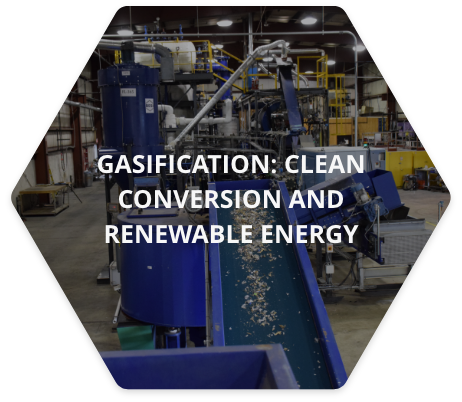
Our approach has been shaped in part through our work with the U.S. military. Since 2007, BESI has developed thermal platforms for the military R&D community, including U.S. Air Force Research Laboratory-funded gasification demonstrations supporting Forward Operating Base applications in Illinois and at Joint Base Pearl Harbor-Hickam, Hawaii.
Technology must work in the real world.
It must be adaptable, scalable, and capable of meeting operating requirements outside the controlled conditions of a laboratory.
Today, BESI is building on that experience with next-generation work involving Strategic Critical Materials recovery, military-specific energy technologies, and other capabilities supporting readiness and supply-chain resilience.
Sometimes, big problems need small-scale solutions.
For Strategic Critical Materials, distributed and modular capabilities can create new options: locating recovery closer to material sources, adapting systems as material priorities change, and building domestic capacity incrementally rather than waiting for a single large-scale solution.
Collaboration Is the Force Multiplier
No single company, agency, university, laboratory, or technology will solve the Strategic Critical Materials challenge.
The opportunity is in connecting capabilities.
Government can identify mission priorities and supply vulnerabilities. Industry can bring speed, engineering, and commercialization expertise. Universities and laboratories can advance materials science and recovery technologies. Logistics organizations can identify where Strategic Critical Materials reside throughout product lifecycles, and how they can be recovered and returned to productive use.
Done well, these partnerships can shorten lead times, create additional domestic sources, recover value from existing assets, and improve the speed and precision of defense logistics decisions.
The result is not simply another supply chain.
It is a more adaptive domestic materials ecosystem, where production, recovery, technology, and logistics reinforce one another.
From Obligation to Advantage
At BESI, we believe practical innovation and a willingness to look at existing resources differently can help turn supply vulnerabilities into new sources of strength.
That also means developing the people who will carry this work forward. Through our laboratories, BESI provides internships and opportunities for interested high school and college students to participate directly in applied technology development, connecting the future workforce with the future of innovation in real time.
We are committed to bringing our technology, engineering experience, and problem-solving capabilities to the Strategic Critical Materials challenge while continuing to explore new ways to strengthen domestic resource resilience and defense readiness.
And we welcome conversations with government, defense, industry, research, and technology organizations interested in doing the same.
Tomorrow’s defense supply chain may begin with materials we already have. The opportunity is learning how to recover them, mobilize them, and put them back to work. Contact a BESI alternative energy expert to learn more.