From Plastic Problem to Power Advantage
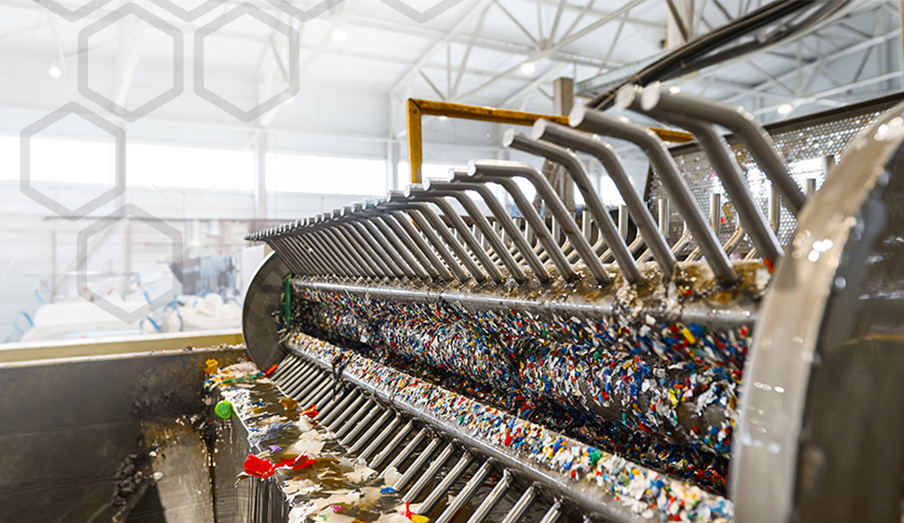
Plastic waste is one of those environmental problems everyone can see. It accumulates in landfills, appears along coastlines and waterways, and persists in the environment long after its original purpose has ended.
More than 400 million tons of plastic are produced each year globally, and the volume of plastic waste is expected to grow substantially in the decades ahead if current patterns continue.
There is no single answer. Reduction, reuse, and recycling all have essential roles.
But there is another part of the equation that deserves attention:
What do we do with plastic waste that cannot be practically or economically reused or recycled?
For more than two decades, BESI has approached that question from a practical perspective. Instead of treating difficult waste solely as a disposal problem, how can we recover useful value from it?
That question has guided BESI’s work from early waste-to-energy development to today’s growing focus on plastics-to-power.
From Waste-to-Energy to Plastics-to-Power
Waste-to-energy can provide another pathway for selected end-of-life waste streams by converting their remaining energy value into useful heat, electricity or fuel.
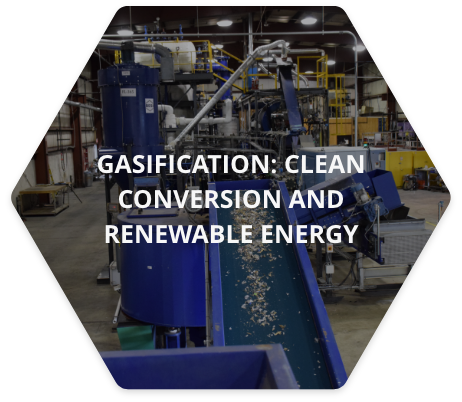
For approximately 20 years, BESI has advanced a model based on small-scale, distributed gasification – not incineration.
The distinction is important.
BESI’s approach is designed around thermal conversion of appropriate waste streams into a usable energy resource, at a scale that allows the technology to be located at or near the point where both the waste and the energy requirement exist.
That thinking shaped the original BESI TurnW2E® gasification platform, developed to process diverse waste streams and support thermal and electrical energy applications.
Rather than requiring the scale of traditional centralized waste-to-energy infrastructure, BESI’s distributed approach was developed for applications where smaller scale, flexibility, and proximity to the waste source matter – including industrial facilities and military installations.
Today, that technology foundation is supporting an increasingly important application:
Plastics-to-power.
End-of-life plastics that cannot be effectively reused or recycled still contain substantial energy value. With the right technology, that value can potentially become a local energy resource – even when the available waste volumes do not justify large, centralized infrastructure.
The opportunity is to match the resource to the requirement at the point of need.
On a military installation, that could mean supporting energy requirements on a flight line.
In a commercial logistics network, it could mean using end-of-life plastics generated by the operation to help charge the last-mile electric delivery vehicles serving that network.
At an industrial facility, it could mean converting an onsite waste liability into useful energy before the material ever leaves the property.
The applications differ. The principle does not.
Another Option for End-of-Life Plastics
The hierarchy remains important.
If a plastic product can be reused, it should be.
If it can be effectively recycled, it should be.
But when neither option is technically or economically practical, recovering the material’s remaining energy value can provide another pathway – reducing material requiring disposal while producing useful energy.
Plastics-to-power does not need to compete with recycling. It can address part of the waste stream that recycling cannot.
That distinction becomes increasingly important as companies, governments and communities look for practical ways to manage difficult plastic waste without assuming that every polymer, composite or contaminated plastic stream can simply be recycled into another product.
Innovation Grounded in Real-World Use
BESI’s approach has never been limited to laboratory theory.
Its technology has been developed and demonstrated in military settings and designed for applications where reliability, flexibility and practical deployment matter. Today, the BESI laboratory includes technology platforms ranging from tabletop simulators to full-scale systems.
At Joint Base Pearl Harbor-Hickam, Hawaii, BESI technology was demonstrated as part of a U.S. military effort involving waste conversion, distributed power and microgrid capabilities.
In Illinois, BESI developed a full-scale Forward Operating Base research facility to evaluate waste streams and energy outputs for military, municipal and commercial applications. That work helped establish the technical foundation for BESI’s laboratory and development facility outside Chicago.
The experience reinforced an important principle:
Environmental technology must work in the real world.
It must address actual waste streams, fit real operating environments and produce outputs with practical value.
A More Useful View of Plastic Waste
The environmental case for better plastic-waste options is clear. But the opportunity becomes more compelling when we look beyond the waste itself.
Difficult-to-recycle plastics already exist across military, municipal, logistics and industrial environments.
Instead of automatically transporting those materials elsewhere for disposal, distributed technologies create the possibility of addressing selected waste streams closer to where they are generated – and connecting their remaining energy value with a nearby energy requirement.
That changes the equation.
Waste management and energy generation should no longer be treated as entirely separate challenges.
A logistics facility generating end-of-life plastics may also be electrifying its vehicle fleet.
An industrial facility producing difficult plastic waste also purchases electricity and thermal energy.
A military installation must manage waste while maintaining resilient energy capabilities.
Sometimes the waste resource and the energy requirement are already in the same place.
The opportunity is connecting them.
Looking Forward: Mobility, Facility and Digital Infrastructure
Today, BESI is building on the foundation of its waste-to-energy experience to advance plastics-to-power solutions for emerging applications, including electrified logistics, process energy and resilient energy systems.
We see opportunities across three broad areas: Mobility, Facility and Digital Infrastructure.
Mobility includes EV charging and other distributed transportation-energy requirements, particularly where logistics operations generate both plastic waste and demand for vehicle charging.
Facility applications include industrial, military, and other operations where appropriate end-of-life plastic streams may be converted into useful onsite thermal or electrical energy.
Digital Infrastructure includes data centers and other energy-intensive operations where distributed systems can support process energy, thermal requirements, supplemental or peaking power, and other appropriate onsite energy needs.
Across all three, the opportunity is fundamentally the same: locate the energy solution where the waste resource and the energy requirement intersect.
The scale and application may change.
The underlying philosophy does not:
Identify a difficult environmental and operational problem. Apply proven science and engineering. Turn it into a practical resource.
Progress on plastic waste will require many participants and many approaches. Reduction, reuse, and recycling remain essential. But difficult end-of-life plastics also require practical alternatives when those pathways are no longer available.
After two decades of developing distributed waste-to-energy technology, BESI believes plastics-to-power can be one of those alternatives.
Sometimes big problems need small-scale solutions.
Scaling Through Collaboration
Scaling these solutions creates opportunities for collaboration across the value chain. BESI’s strategy includes teaming with established waste, energy, engineering, logistics and infrastructure companies whose capabilities, customer relationships and operating scale can complement the BESI technology platform. Together, those capabilities can create practical deployment models tailored to the waste streams, energy requirements and operating environments of individual customers.
For companies already managing waste, energy, logistics or infrastructure, plastics-to-power can represent an opportunity to add a new capability to what they already do well.
BESI welcomes conversations with government, industry and potential strategic partners interested in combining complementary capabilities to advance practical plastics-to-power applications and more resilient approaches to waste and energy.
Learn more about BESI’s work in plastics-to-power and explore opportunities to collaborate.